
.svg)
Introduction
As you’ve likely heard, artificial intelligence presents real-world opportunities to innovate at an impressive scale. Even if that phrase sounds perfectly at home in a Microsoft CoPilot ad, it’s also not far off from the truth—the potential impact of generative AI and natural language processing (NLP) in legal services is impressive.
Whether it's advanced predictive algorithms or multimodal language models, recent advancements have unlocked a new shared vocabulary in professional communication. While the opportunities may seem endless—or absent, for our more skeptical readers—we are quickly realizing the immense challenges presented by the real-world applications of this fast-changing and broad area of technology.
For legal services, where technological innovation is often met with apprehension and skepticism, the potential long-term impact will likely be shaped by our ability to build consensus on usage and limitations. The legal field's success in adopting generative AI, therefore, depends largely on its willingness to collaborate openly and honestly.
A roadmap
For this uphill task, we can turn to the field of medicine as a roadmap for technology adoption in a similarly high-stakes, regulated environment. And compared to legal services, this adoption is far more efficient when you consider the relative rate of innovation in medicine.
John Pandolfino, MD, Chief Physician of Gastroenterology and Hepatology (and Hans Popper Professor of Medicine) at Northwestern University’s Feinberg School of Medicine in Chicago, states candidly:
“You learn on the fly.”
It’s a simple, effective strategy when you need to keep up with the rapid pace of innovation in medicine. According to Dr. Pandolfino:
“The attendings and the fellows are learning at the same time. These changes don’t occur over 3-5 years—they occur over 6-12 months and they are constantly updating. We find that the fellows are more open to these changes and sometimes the attendings are behind.” (emphasis added)
And while imperfect, the medical field’s history of technology adoption offers helpful frameworks for addressing the many ethical concerns in navigating confidentiality, data privacy, and government regulatory hurdles. The legal profession stands to benefit from medicine’s more mature, industry-wide approach to addressing these challenges—provided that we focus on key takeaways and learnings rather than getting bogged down in minute comparisons.
A history of reluctant change
The legal profession is often (accurately) characterized as resistant to change and technological innovation. It is an industry rooted in traditional practices and standards that date back centuries. The role of legal education in fostering technical competency can’t be overstated, yet it often fails to adequately prepare attorneys for the wave of innovation that is currently reshaping legal services.
Recent waves of technical innovation in the legal industry—e-discovery, legal research databases, document and workflow automation—have been met with an underwhelming degree of diffusion. As Chay Brooks and others note in ‘Artificial intelligence in the legal sector: pressures and challenges of transformation’ (Cambridge Journal of Regions, Economy and Society, 2020):
“(...) a pervading reactive mindset and resistance to change hamper enduring transformation and opportunities for innovation, while established and management structures disincentivise change. Skill gaps, coupled with fear and mistrust of technology and data concerns, further fuel conservative approaches.” (emphasis added)
Law school to law firm
While the adoption of AI tools is certainly growing within legal circles, concerns about broader industry-wide adoption are fair. Interestingly, it’s law students who have shown particularly widespread skepticism.
Referencing a 2023 LexisNexis survey, Serena Wellen explains in LawNext that only a small fraction of surveyed law students say they’re currently using AI in their studies (9%), or plan to use it in their future work (25%). Wellen points to concerns with research accuracy and academic integrity—along with potential impact on career opportunities and skill development—as particularly impactful in dissuading law students from using the technology.
Concerns with AI tools’ tendency to learn discriminatory biases represented in training data likely also contribute to students’ skepticism. And while AI-related courses are quickly sprouting up at law schools across the U.S., these are far from mature, comprehensive programs as of today (in August 2024).
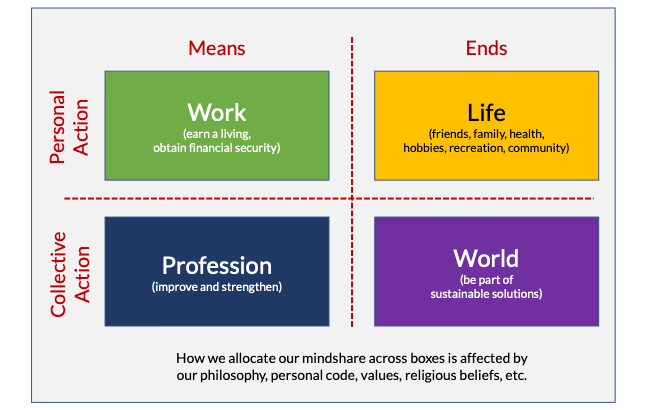
William Henderson, Professor of Law at Indiana University Maurer School of Law—and Founder and Editor of Legal Evolution—addresses the unique challenges preventing disruption in the legal education formula in a 2023 article, ‘Mindshare matrix for legal professionals’ (Legal Evolution). Henderson summarizes bluntly:
“(...) the U.S. legal profession has virtually no experience engaging in significant collective action that strengthens and improves our ability to better serve either the public or our members." (emphasis added)
In a new interview for this article, Henderson expands on the issues of collective action in law:
“One difference between medicine and legal, above many things here, is that you have corporate clients. There’s more and more atrophy in the consumer law market.
With the collective action problems in law, the consumer market is smaller than the corporate market. How do we serve these people? In healthcare, the beginning and end is sick people.”
Henderson also points to the career decisions faced by new attorneys, who are often forced to choose between lucrative corporate careers and ‘consumer law’ practices, where incomes are much lower. Along with differences in career earnings potential, the contrast in resources also plays out in the training and development of new attorneys. “It’s two very separate professions,” explains Henderson.
As this dichotomy plays out early in the careers of most attorneys, digital competency and technology adoption are presumably impacted as well. Whether these differences expand—or narrow—through this current wave of AI solutions is worth observing. Responsible application, effective education and training, and scalable impact all depend on collective professional frameworks and resources.
A hint of change
Despite skepticism, the legal profession’s historical resistance to change doesn’t necessarily guarantee a similar outcome with generative AI. Recent shifts in the market—from regulatory ‘sandboxes’ in Utah and Arizona to an increase in demand for alternative legal service providers (ALSPs)—may signal broader opportunities for client-driven innovation.
A leading scholar and author on the future of legal services, British professor Richard Susskind shared the following thoughts on LinkedIn in 2023:
“It is interesting that most of the commentary on the impact of AI on the law has focused on what this means for lawyers and judges. In medicine, when there is a new drug or procedure, the discussion does not focus on what this means for doctors. Lawyers and the media would do well to ask more often what generative AI mean [sic] for access to justice and for the client community generally.”
– Richard Susskind, LinkedIn (2023), ‘AI in the law – six thoughts’ (emphasis added)
As we quickly move into a new era of generative AI tools, we need to address the potential impact on legal services more collaboratively. And most importantly, from the lens of the end-consumers—the people and organizations seeking these services.
Tech adoption in medicine
In contrast, the medical field has historically embraced technological change more openly and collaboratively. From advancements in medical imaging and diagnostics to the advent of telemedicine and electronic health records, technology has been a significant driver of progress in modern healthcare. This adoption has been facilitated by several institutional, collective resources that distinguish the healthcare industry from the legal sector.
The medical education system plays an obvious, vital role in preparing healthcare professionals for modern medicine’s technical demands. Introducing doctors to cutting-edge technology in medical school and mandatory residency programs helps establish a baseline competency, while intensive fellowships and research opportunities provide opportunities for deeper specialized learning.
Residents and fellows
As the Division Chief for Gastroenterology and Hepatology, Dr. Pandolfino is directly involved with the training and educational curriculum for Northwestern Medicine's GI and hepatology department. It’s a complex system of professionals managing a variety of functions—aside from the clinical care provided to patients, a research component consists of dozens of research investigators and other professionals.
When it comes to building technical competency as a resident, Dr. Pandolfino highlights the importance of on-the-job training: “much is self-taught and exploration.”
Christina Kunycky, MD, Clinical Fellow and Instructor in Urogynecology and Reproductive Pelvic Surgery at the University of North Carolina, agrees:
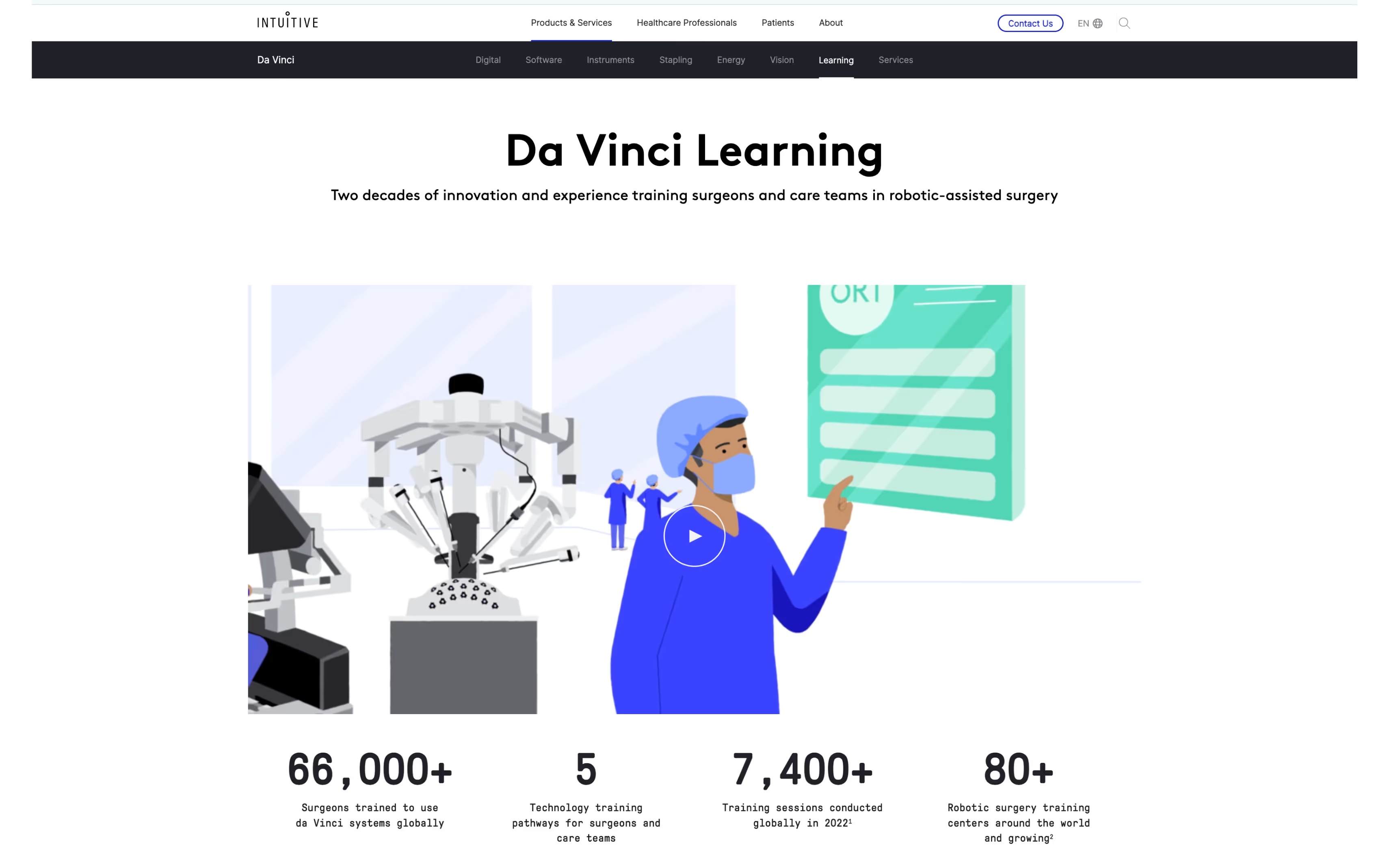
“The pace of medicine necessitates efficiency and as a result rapid adoption of technologies that improve efficiency are quickly integrated into practice such as the electronic medical record, or the da Vinci Surgery Robot. The volume of patient care that you undertake daily in residency and fellowship allows you to engage with the EMR, imaging modalities and surgical technology so frequently that growth in technical skills can be rapid.”
Sydney Greenberg, MD, Clinical Instructor and Advanced GI Fellow in ‘Third Space Endoscopy and Complex Resection’ at the University of North Carolina, argues there is a contrast in adoption that depends on the use case:
“I think a key difference between integration of computer or informational resource advancements, as opposed to procedural technology advancements, is that there is a lower barrier to providers integrating the former into their practice, and as such, user practices are retrospectively evaluated and attempted to be shaped into best practices and guidelines.”
Dr. Greenberg notes that recent AI advancements offer a useful example of this contrast. Providers are quicker to test generative AI tools for tasks like patient portal responses or clinical note summaries, even while “researchers and medical societies are still trying to determine what their guidance will be.”
This ‘on-the-go’ approach to adoption isn’t the case for procedural technology—for example, a new surgical or diagnostic tool. For these products, practitioners will wait for formal guidance before testing and implementing into their practice.
Super-users
Drs. Pandolfino and Greenberg point to the value of tech ‘super users’—staff members who provide subject matter resources and training, like tutorials on the hospital’s electronic medical record system (think Epic Systems). Or tips on using a clinical decision support system (CDSS) or medical database like UpToDate or PubMed.
While on-the-job training is critical, physicians also benefit from structured training sessions on these technologies. Dr. Greenberg explains:
“Structured training offers the opportunity to learn competency in new procedural techniques & technology in a low-risk, scaled setting.”
Dr. Kunycky agrees, and highlights the value of structured didactic sessions, surgical simulations, and journal clubs for staying up-to-date on technological advances. She explains how the broader system of academic and clinical education prepares doctors for the requirements of their particular specialty. According to Dr. Kunycky:
“As doctors further sub-specialize, specialty specific technology becomes a part of daily practice in the clinic or in the operating room during fellowship training. In fellowship training you are furthermore connected with the industries developing the technology and they provide resources and education materials.”
With a robust system of continuing education opportunities and technical certifications, the medical community has collaborated to design collective resources and qualification systems. These institutionalized mechanisms help foster technical skill development among practitioners.
A professional ecosystem
But this commitment to technical competency also extends beyond doctors to include nurses, medical technicians, physical and occupational therapists, and dozens of other professions, ensuring a holistic adoption of technology across the healthcare ecosystem.

From "Mindshare matrix for legal professionals", Legal Evolution 2023
In his article ‘Mindshare Matrix for Legal Professionals’ (Legal Evolution), William Henderson explicitly points to the extensive system of professional credentialing organizations powering the U.S. healthcare system. According to Henderson, this system of professional organizations in medicine:
“(...) represents a lot of collective action in service of a professional mission. In contrast, in the legal industry, we’re trying to elevate our game through 60-90 minute educational sessions at industry events that are substantially funded by vendors. This hinders our progress and reflects poorly on our so-called profession.” (emphasis added)
Examples of this collective action include ‘terminal education’ programs, like a Doctor of Nursing Practice (DNP), and other advanced practice degrees and credentials. Kelsey Corbelli, DNP, a practitioner at Rush University Medical Center in Chicago, explains how these programs offer advancement opportunities for mid-career healthcare professionals:
“There are a variety of different graduate degrees within nursing that prepare nurses with either a master’s degree or doctorate to qualify for career advancement. If a nurse desires to work in management or higher leadership, there is a master’s in leadership that is required.”
With advanced practice degrees like the DNP, nurses are able to specialize in a clinical area or patient population—serving as part of the clinical management team and independent provider. The education and training involved in these programs reflects this goal. According to Corbelli:
“A large component of my DNP education was learning how to function and practice as a provider using EMRs as well as knowing where and how to find trustworthy information needed to make informed decisions.”
Research & development
The medical field's collaborative research systems have also fostered a culture of technology adoption. Partnerships between academic institutions, research organizations, and industry stakeholders have led to breakthroughs that have transformed patient care. Artificial intelligence, in particular, has found widespread appeal in medical research communities for its broad applications in data analytics and pattern detection.
Along with his position as Division Chief for the GI & Hepatology department at Northwestern Medicine, Dr. Pandolfino is also the primary researcher leading the new ‘Center for Artificial Intelligence and Mathematics in Gastroenterology’—a collaboration between Northwestern University’s Feinberg School of Medicine and the university’s McCormick School of Engineering.
This collaborative team of engineers and physician scientists is working on advanced mathematical models to study the mechanisms that lead to poor gastrointestinal function. The Center’s current projects include developing hybrid AI diagnostic tools, forecasting models for disease outcomes, and virtual organs for research on the impact of surgeries and medications.
According to Dr. Pandolfino:
“We have a direct partnership—Neelesh Patankar, PhD is a professor at McCormick and we are partners in most of the work we do. I have 1-2 doctoral students in engineering working with me at all times. The partnership is seamless as we respect what each of us brings to the table—there is very little overlap, and we rely on each other.”
Frameworks and challenges
Despite these positive trends, the medical field isn’t without its own challenges in technology adoption. Ethical concerns around patient privacy and the use of AI in medical decision-making, for example, pose significant challenges today. Regulatory protections—like the Health Insurance Portability and Accountability Act (HIPAA) in the U.S. and the General Data Protection Regulation (GDPR) in the EU—require careful navigation.
The use of clinical decision support systems (CDSS), in particular, offer a useful framework for AI-assisted decision-making. Tools like UpToDate and Merative (formerly IBM Watson Health) use neural networks and predictive analytics to give healthcare providers the evidence-based, data-driven guidance they need to better inform their clinical decisions—like a disease diagnosis or a search for drug contradictions.

Unlike many of the legal technology products incorporating generative AI features over the past few years, products like UptoDate have been on the market for decades—and used by tens of thousands of healthcare professionals globally. This widespread adoption of foundational CDSS tools has seemingly contributed to the industry’s ability to explore new technological advancements while simultaneously researching and setting best practices and regulations.
Patient-centered care
It’s important to note that a historical trend towards patient-driven services has also helped push the healthcare industry to leverage new technology.
A hospital system may turn to a patient portal to improve experiences—giving users more tools to manage their care, plan for healthcare costs, and give feedback on services. A neighborhood urgent care clinic, meanwhile, might explore digital tools to better connect with local communities. This focus on solving pain points (literally and figuratively) from the patient’s point-of-view shows promise in improving health outcomes and patient experiences.
Through ongoing dialogue, policy updates, and a commitment to ethical practice, the medical field continues to navigate these challenges, demonstrating a model of innovative resilience in the face of rapid technological change.
The healthcare industry's history of technology adoption provides valuable insights. It's a testament to the vast potential of technology when applied responsibly and ethically. The frameworks developed and lessons learned from the medical field can provide valuable guidance for the legal profession.
An AI-powered, human-driven roadmap
The legal services and healthcare industries face a series of parallel challenges in adopting AI, including ethical implications, regulatory constraints, and technical education demands. Fortunately, the medical field’s willingness to collaborate more openly with patients and other stakeholders offers a broad roadmap for AI tech adoption and innovation in law.
A starting point
So, how might the legal world adopt similar systems for collective action? Fortunately, the building blocks already exist.
The Legal Design Lab—a collaboration between Stanford Law School and d.school (Stanford’s design school)—is an example of the cross-industry resources that can propel legal innovation. From redesigning FAQ pages for court systems to organizing new taxonomies for legal-specific data, the Legal Design Lab offers a blueprint for broader efforts.
And Stanford isn’t the only university looking to reimagine its law school experience—GW Law launched their Center for Law and Technology in late 2023. Suffolk Law School offers a focus in ‘Legal Innovation & Technology’ for JD students, widely recognized for its effective approach to technical education.
While these schools—among others—are quickly adding new tech-focused courses on generative AI, intellectual property, and other relevant topics, it’s unclear whether this is a signal of a broader sea change. As Robert Ambrogi reports in LawSites (July 2024), the recent adoption of AI courses in law schools might be overstated.
Scales of change
Despite the exciting trends, there’s still a long, uphill battle in our future. Innovators and early adopters are a small portion of the broader legal field. Until these resources become industry-standard, the profession will continue to struggle—in delivering services, building technological competency, and adapting to modern business demands.
As Greg Andrews explains in his article “Law schools neglecting desperate need for tech training” (Law.com, Dec 2023):
“He [Professor Raymond Brescia, Harold R. Tyler chair in law and technology at the Albany Law School] likened the scale of change that’s coming to the practice of law to what occurred toward the end of the 19th century, when the arrival of telephones, typewriters and the rapid reproduction and dissemination of judicial decisions fundamentally altered lawyers’ professional lives.
To implement these frameworks both ethically and effectively, we need to first address several structural restraints unique to the legal profession. With a revised roadmap—refined by the industry’s innovators and early adopters—we can adapt new approaches to technical innovation in a similarly high-stakes, risk-averse field.
This requires active collaboration, continuous education, and a commitment to ethical practices. By doing so, we can help expand access to justice and improve how we deliver legal services.
---
DISCLAIMER: Dr. John Pandolfino and Andrew Thrasher are both actively involved in the Digestive Health Foundation, a 501(c)(3) nonprofit organization that supports many of the research projects affiliated with Northwestern Medicine’s Digestive Health Center.