KM + AI = ?

The current state of law firm knowledge
In the constantly moving waters of U.S. immigration law, an up-to-date knowledge base is essential to stay afloat. But as important as it is, it's also a major challenge for many law firms. Legal teams are often forced to navigate through disorganized files, outdated templates, and vaguely named folders to complete critical work.
Meanwhile, it's becoming increasingly clear that generative AI will be a game-changer for the industry—transforming not only how we organize and produce knowledge content but also how we design a more client-centric experience.
So, how will legal professionals adapt to (and adopt) new solutions to help with familiar challenges?
3 Common Problems:
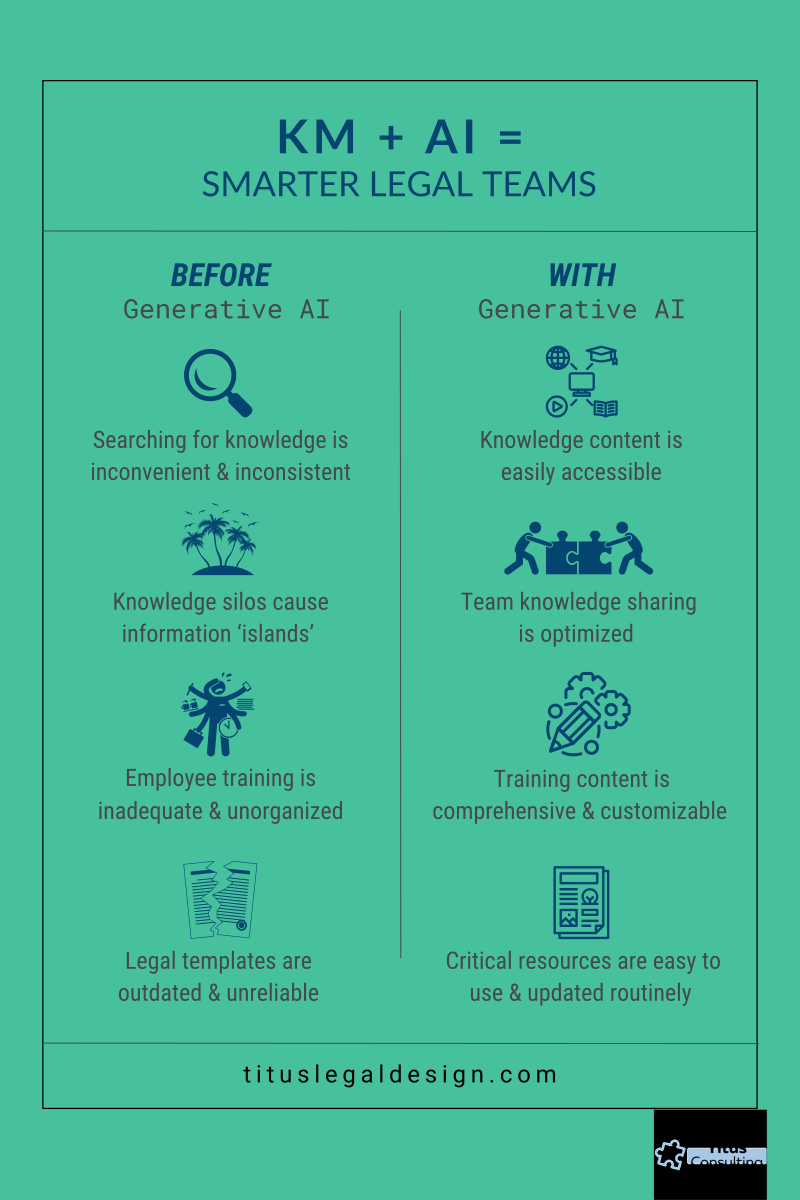
The current state of knowledge management in many immigration law firms is, frankly, ineffective. Think: disjointed organization and inconsistent naming classifications, outdated or unusable templates, and inaccessible information.
- Scattered Information: A maze of sporadically named documents spread across multiple platforms is a common symptom of unreliable knowledge management systems that aren't friendly to new users.
- Outdated Knowledge: Resources that aren't updated consistently often lead to inaccuracies, discrepancies in service delivery, and knowledge silos across your team. With the frequency of changes in legal policy and enforcement in immigration law, a memo template from 6 months ago could be irrelevant today.
- Inaccessibility: A lack of a centralized 'source of truth' that is easy to access to search for key legal, operational, and business knowledge. Fragmented systems make it difficult for team members to find what they need, when they need it.
Enter: Generative AI
Generative AI will likely reshape how we manage, organize, and produce legal content in several ways. Use cases that are already being explored in-depth include drafting of legal templates, flagging outdated information for human review, and sifting through mountains of evidence, policy, and case law to generate affidavits and other resources.
Potential Impact on Immigration Legal Work:
Automated Document Generation: By populating government forms or drafting support letters and affidavits, generative AI and RPA tools can minimize the need for manual inputs and reduce the risk of human error and inconsistencies.
Content Enhancement & Updating: Knowledge management tools will be able to review and improve upon existing resources, to help keep templates and other content up-to-date and relevant to your team.
Strategic Guidance: By analyzing large datasets for predictive forecasting and other insights, generative AI can inform decision-making for your legal practice and overall business strategy.
Augmenting Client Interactions:
But generative AI's value in law isn't just about streamlining operations and automating rote tasks. It's also about enhancing the client experience at scale, a notoriously undervalued piece to legal service delivery.
With strengths in language translation and multimodal (e.g. audio-text) transcription—and the ability to offer tailored communication styles to each user—large language models offer some intriguing opportunities to improve law firms' client services.
- Automated FAQs: A dynamic FAQ page or chatbot that creates personalized answers for clients based on their case history. Client newsletters tailored with the most current and relevant news for each individual.
- Interactive Forms: Clients can fill out forms that are customized in real-time based on their previous answers, offering a more personalized experience. With the ability to quickly 'learn' a user, conversational AI tools can adjust vocabulary, tone, reference material, and writing style to improve comprehension and encourage more reliable data intake.
- Smart Notifications: Clients might receive updates on case developments or pending deadlines through automatically generated notifications, or by interacting with a chatbot in their client portal.
The shift from gatekeeper to navigator
As Jason Barnwell aptly explained in his article 'Designing knowledge work' (Legal Evolution, May 2020), the value of legal professionals is no longer tied to merely possessing knowledge:
"Historically, many legal professionals’ roles created value by positioning them as information gatekeepers. The future is information plenty." – Jason Barnwell
We'll continue to see a shift in the legal profession, moving from a value system that prioritizes gatekeepers of information to one that empowers curators and interpreters—those who can make complex legal processes more digestible for clients. Fortunately, generative AI can aid in this transition with data-driven insights and knowledge management enhancements that allow legal teams to focus on the 'big picture' work that is higher value and more impactful.
Next steps
Generative AI advancements may force us to redefine what are considered 'best practices' in knowledge management. It's a tool that will allow law firms to design smarter, more efficient knowledge bases that simultaneously offer both operational improvements and client experience gains.
With the ability to augment our legal work and guide strategic decisions, the potential impact on legal teams is wide-reaching and, understandably, disconcerting for many. By taking a responsible, learning-driven approach to AI, smart law firm leaders can encourage innovative solutions and knowledge sharing advancements that help future-proof their business.